Telescopic cylinders

Storz Products > Telescopic cylinders

Hydraulic cylinders according to DIN, ISO

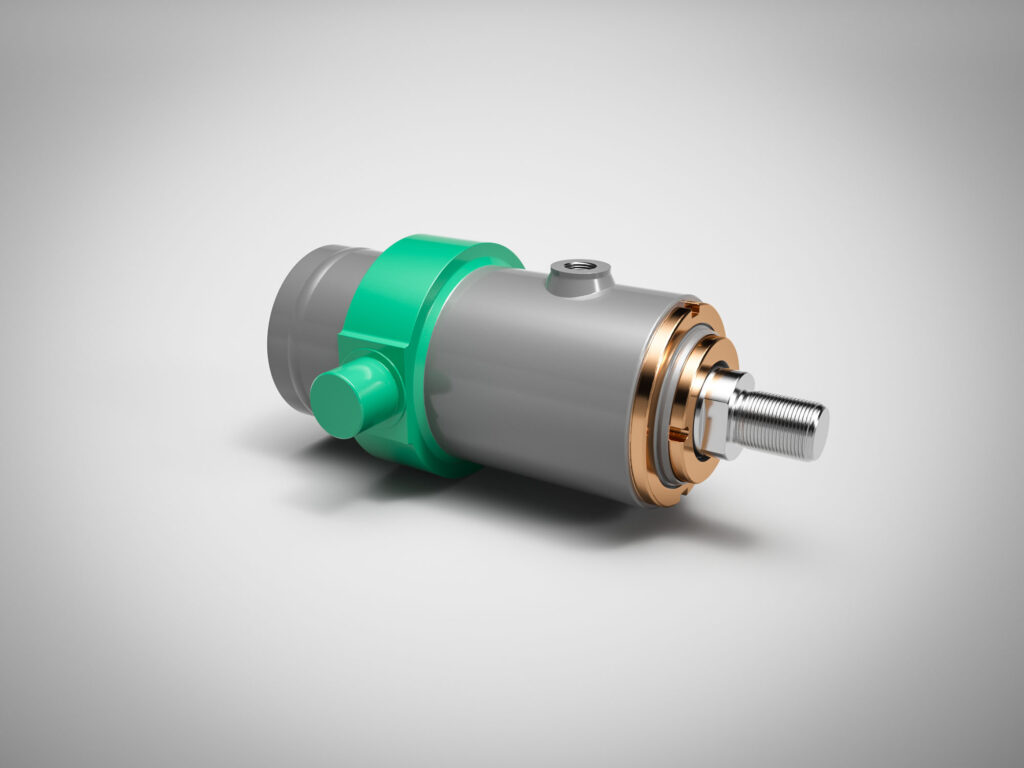
Telescopic cylinders consist of several nested cylinder tubes and can therefore generate more stroke than they are long.

Technical Documents

ZTW 212 – ND 120 bar – data sheet
ztw-212.pdf PDF-document [1.77 MB]
Suitable mounting parts DIN 24337
befestigungsteile_din24337-10-1.pdf PDF-Dokument [775.3 KB]

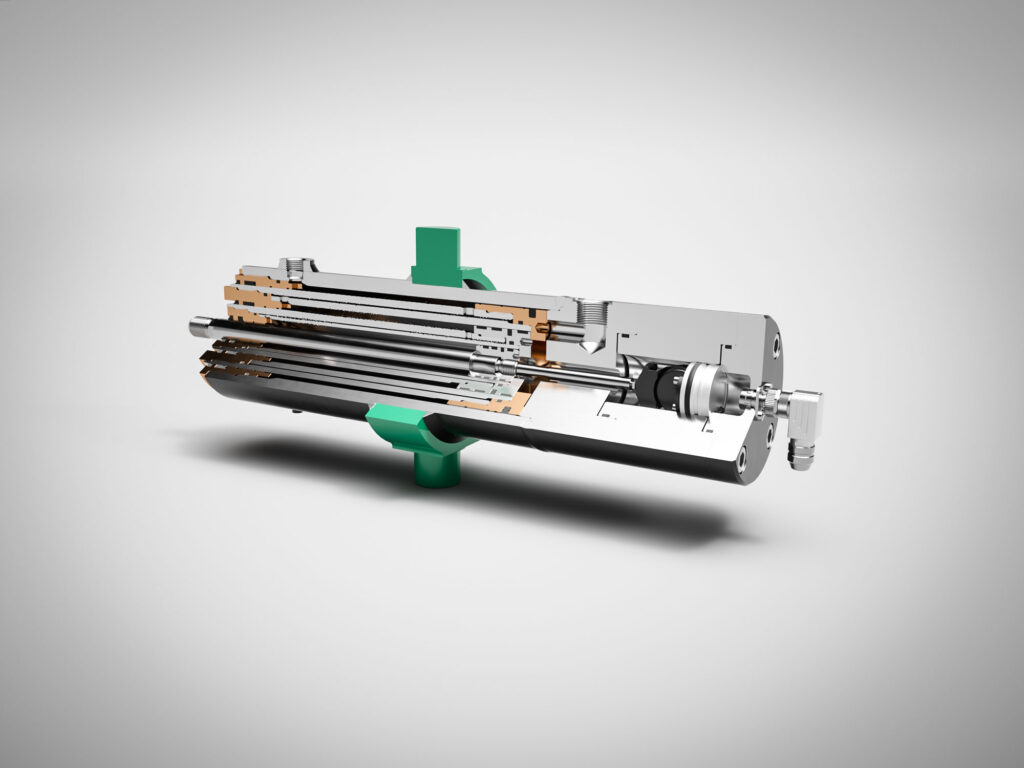
ZTW 212 – Double-acting telescopic cylinder with displacement measuring system – Nominal pressure 120 bar (12 MPa)

Good to know: Here we have further developed the ZT 212 double-acting telescopic cylinder series in response to increased customer demand.

  • standardized
  • with a stroke length of up to 5000 mm, in 2- or 3- stage versions (available with more stages on request).
  • integrated displacement transducer, completely enclosed, sealed off (IP69K)
  • internally installed, pressure-resistant wire-actuated encoder for recording the displacement of the piston rod
  • reliable, absolute encoding of the stroke at every stage
  • for repeat accuracies of 0.2 mm.
  • for analog values, CANopen and redundant measurement
  • Plug connector as connection interface

Technical data

Nominal pressure: 120 bar (12 MPa)
Static test pressure: 180 bar (18 MPa)
Piston diameter: 63 – 140 mm (others possible on request)
Temperature range -20 °C … +80 °C (through hydraulic fluid)
Viscosity range: (10 … 600) 10-6 m²/s
Lifting speed: 0 – 0,5 m/s
Operating medium: Mineral oil according to DIN 51524, HFD fluids

Befestigungsarten

Technical Documents

ZT 212 – ND 120 bar – data sheet
zt212_teleskopzylinder_120bar.pdf PDF-document [3.5 MB]
Suitable mounting parts DIN 24337
befestigungsteile_din24337-10.pdf PDF-document [775.3 KB]

ZT 212 – Telescopic hydraulic cylinders (Storz standard) – Nominal pressure 120 bar (12 MPa)

Good to know: The telescopic cylinders are available in double-acting and single-acting versions.

  • standardized
  • in a 4-stage variant
  • Available in a choice of 6 mounting types for a wide range of applications

Technical data

Nominal pressure: 120 bar (12 MPa)
Static test pressure: 180 bar (18 MPa)
Piston diameter: 32 – 280 mm
Temperature range: -20…+80 °C
Viscosity range: 10…600 mm/s²
Lifting speed: 0-0,5 m/s
Operating medium: Mineral oil according to DIN 51524, HFD fluids HFA, HFB and HFC fluids by special designs

Befestigungsarten

About telescopic cylinders

Function and stroke of telescopic cylinders

A telescopic cylinder is a special type of hydraulic cylinder consisting of multiple segments. This design allows the cylinder to be collapsed telescopically and extended in stages. This enables telescopic cylinders to have a significantly longer stroke than their retracted state. Because the segments, also called stages, are nested within each other, the effective area increases with each stage. As a result, the largest stage extends first, delivering the greatest force, followed by the next smaller stage. With multi-stage telescopic cylinders, it’s important to note that at a constant flow rate, each smaller stage extends faster but delivers less force.

Applications of telescopic cylinders

Telescopic cylinders are used in various fields.

Conveyor systems:  They are frequently used in conveyor systems, where they serve to lift and lower materials.

Supports:  Telescopic cylinders allow for flexible adjustment to different heights.

Lifting systems:  Because these cylinders are able to achieve large strokes in a relatively small installation space.

Sampling systems:  Telescopic cylinders are also used in sampling systems to precisely extract samples from different heights or depths.

Advantages of telescopic cylinders

A telescopic cylinder is a special type of hydraulic cylinder consisting of multiple segments. This design allows the cylinder to be collapsed telescopically and extended in stages. This enables telescopic cylinders to have a significantly longer stroke than their retracted state. Because the segments, also called stages, are nested within each other, the effective area increases with each stage. As a result, the largest stage extends first, delivering the greatest force, followed by the next smaller stage. With multi-stage telescopic cylinders, it’s important to note that at a constant flow rate, each smaller stage extends faster but delivers less force.

Protection, maintenance and sealing of telescopic cylinders

Protect your telescopic cylinder

When installing and operating your telescopic cylinder, ensure that the cylinder does not act as a mechanical stop and is installed without tension. Regular cleaning and maintenance of the seals is necessary to prevent premature wear.

Every product starts with productive communication

To ensure that you find the right contact person right away: You can reach your destination quickly by selecting a department:

Enquiry Cart
Enquiry Cart ×
Loading....