
Synchronous cylinders

STORZ PRODUCTS > Synchronous cylinder

Hydraulic cylinders according to DIN, ISO

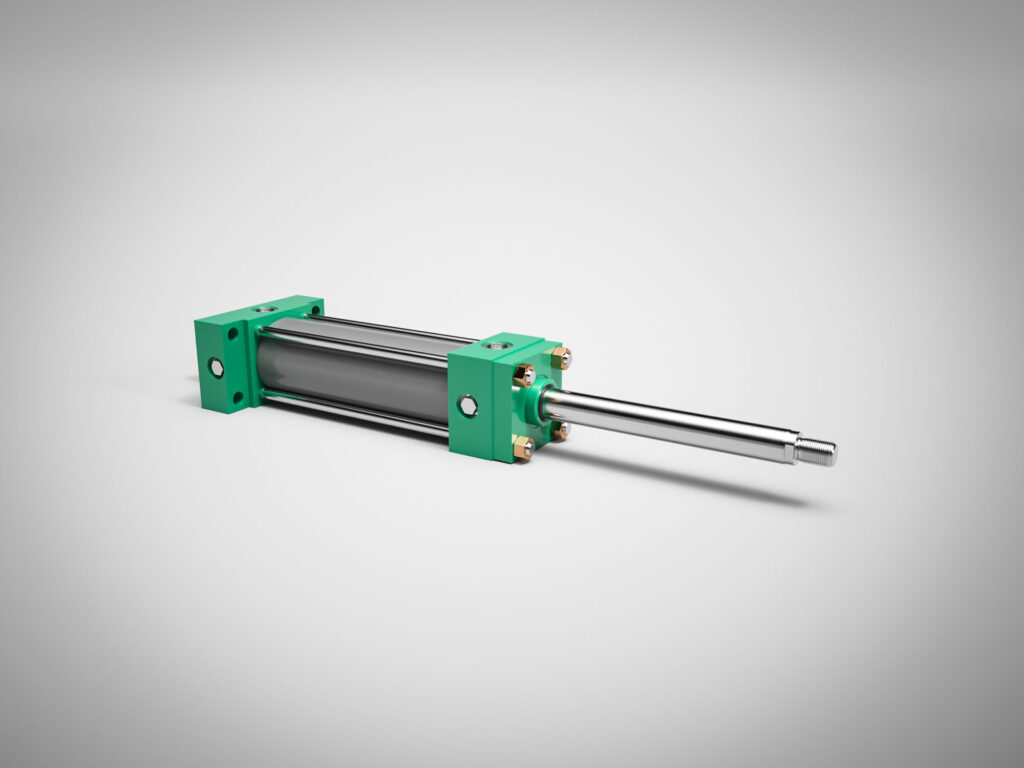
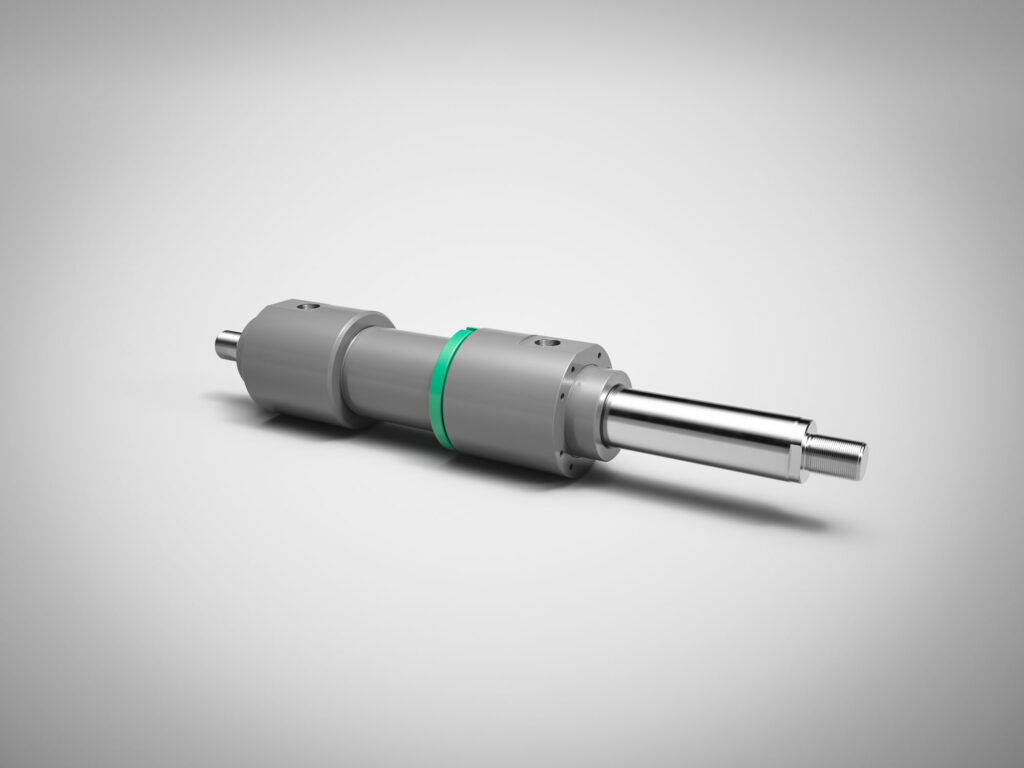
Synchronous cylinders have a piston rod on both ends and identical surface areas on the piston.
This allows for a uniform movement with the same force in both directions.

Technical Documents

ZG 2511 – ND 250 bar – data sheet
zg2511_gleichgang_250bar.pdf PDF-Ddocument [354.2 KB]
Suitable mounting DIN 24337
befestigungsteile_din24337-8.pdf PDF-document [775.3 KB]

ZG 2511 – Standard hydraulic cylinders (DIN 24333) – Nominal pressure 250 bar with piston rod on both sides

Good to know: These hydraulic cylinders have a piston rod that emerges on either side. Their components essentially correspond to the standardized ZBD 2511 series.

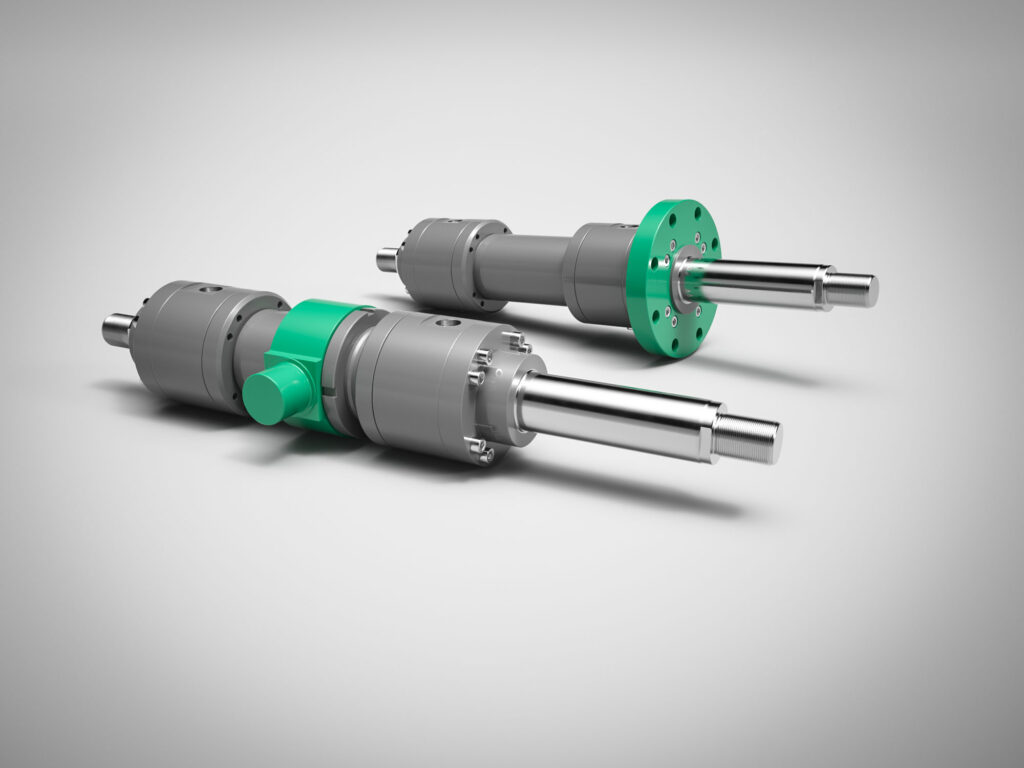
  • Available in 3 mounting types, as well as several sealing variants and piston rod materials, for a wide range of applications
  • Developed as an addition to the STORZ ZBD 2511 hydraulic cylinder series, designed in accordance with the ISO 6022, DIN 24333 and VW 39D921 standards
  • Two piston rod diameters with the corresponding area ratios j=1.6 and j=2 are assigned to each piston diameter as standard

Technical data

Nominal pressure: 250 bar (25 MPa)
Static test pressure: 375 bar (37,5 MPa)
Piston diameter: 40-250 mm (larger than special version)
Area ratio j: 1,6 and 2
Temperature range: -20…+80 °C
Viscosity range: 10…600 mm²/s
Lifting speed: 0 – 1 m/s depending on seal variant
Operating medium: Mineral oil according to DIN 51524, HFD fluids HFA, HFB and HFC fluids possible through special designs

Befestigungsarten

Technical Documents

ZG 1605 – ND 160 bar – data sheet
zg1605_160bar.pdf PDF-document [1.1 MB]
ZG 1605 – ND 160 bar – Data sheet english
zg1605_160bar_en.pdf PDF-document [1.1 MB]
Suitable mounting DIN 24555/24556
befestigungsteile_din24555-1.pdf PDF-document [610.6 KB]

ZG 1605 – Standard hydraulic cylinders (ISO 6020/2) – Nominal pressure 160 bar with piston rod on both sides

Good to know: These hydraulic cylinders are designed according to the modular principle and have a piston rod emerging on both sides. The cylinder barrel, cylinder head and cylinder base are connected to one another by tie rods – the logical addition to the internationally standardized 160 bar tie rod cylinder series.
Their components essentially correspond to the standardized ZBD 1605 series.

  • Two piston rod diameters are assigned to each piston diameter
  • High degree of availability, stockable spare parts and future-proof design
  • Developed as an addition to the Storz ZBD 1605 series hydraulic cylinder, which was designed in accordance with ISO 6020/2 and DIN 24554.
  • 3 mounting types available as standard
  • Several sealing variants to choose from, for a wide range of applications

Technical data

Nominal pressure: 160 bar (16 MPa)
Static test pressure: 240 bar (24 MPa)
Piston diameter: 25-200 mm
Area ratio j: 1,25 and 2
Temperature range: -20…+80 °C
Viscosity range: 10…600 mm²/s
Lifting speed: 0 – 0,5 m/s depending on seal variant
Operating medium: Mineral oil according to DIN 51524, HFD fluids HFA, HFB and HFC fluids possible through special designs

Befestigungsarten

Technical Documents

ZG 1611 – ND 160 bar – data sheet
zg1611_gleichgang_160bar.pdf PDF-document [467.0 KB]
Suitable mounting DIN 24337
befestigungsteile_din24337-9.pdf PDF-document [775.3 KB]

ZG 1611 – Standard hydraulic cylinders (ISO 6020/1) – Nominal pressure 160 bar with piston rod on both sides

Good to know: These hydraulic cylinders have a piston rod that emerges on either side. Their components essentially correspond to those of the standardized ZBD 1611 series.

  • Standardized mounting types A, MT4, MF3, MF1 have been supplemented with a foot mounting
  • Available in several sealing variants and with a choice of different piston rod materials, for a wide range of applications
  • Developed in addition to the STORZ ZBD 1611 hydraulic cylinders, which were designed according to the ISO 6020/1 and VW 39D920 standards
  • Two piston rod diameters with the corresponding area ratios j=1.4 and j=2 are assigned to each piston diameter as standard

Technical data

Nominal pressure: 160 bar (16 MPa)
Static test pressure: 240 bar (24 MPa)
Piston diameter: 25-200 mm
Area ratio j: 1,4 and 2
Temperature range: -20…+80 °C
Viscosity range: 10…600 mm²/s
Lifting speed: 0 – 1 m/s depending on seal variant
Operating medium: Mineral oil according to DIN 51524, HFD fluids HFA, HFB and HFC fluids possible through special designs

Befestigungsarten

About synchronous cylinders

How the synchronous cylinder works

A synchronous cylinder features a double-ended piston rod, ensuring smooth and consistent movement. The piston’s working surfaces distribute force evenly in both directions. Equal surface area on the piston results in the same force being applied in both directions. The piston rod can extend in either direction, making these cylinders suitable for specialized applications. This design enables precise and symmetrical movements, ideal for applications requiring constant force in both directions.

Advantages of the synchronous cylinder

The synchronous cylinder is easy and effective to use. It ensures high precision through consistent speed and identical piston rod travel. These characteristics make it a reliable solution for steering and rudder applications requiring precise and symmetrical movements. Ideal for situations demanding constant forces and bidirectional movement.

Use of the synchronous cylinder

Synchronous cylinders are ideal for specialized applications and can be custom-made to individual specifications. Our cylinders are robust and designed for high-frequency use in general mechanical engineering. Thanks to their precise and consistent movements, they offer a reliable solution for numerous industrial applications. Further technical details can be found in the datasheet for our synchronous cylinders.

Our synchronous cylinders are used, for example, in the following areas:

  • Machine tools:  For precise movements in machining centers and CNC machines.
  • Presses:  In hydraulic presses where uniform pressure distribution is required.
  • Automation technology:  Our cylinders are particularly suitable for use in automation technology.
  • Robotics:  In manipulators and grippers for symmetrical movements.
  • Conveyor technology:  The cylinders with swivel pins offer flexible connection options and are ideal for use in conveyor technology.

Maintenance and servicing

Proper maintenance of synchronous cylinders is essential for their longevity and performance. Regular inspections for leaks, wear, and correct function are important. Oil changes and filtration systems should be serviced according to the manufacturer’s specifications to prevent contamination.

Every product starts with productive communication

To ensure that you find the right contact person right away: You can reach your destination quickly by selecting a department:

Enquiry Cart
Enquiry Cart ×
Loading....