About differential cylinders
Definition
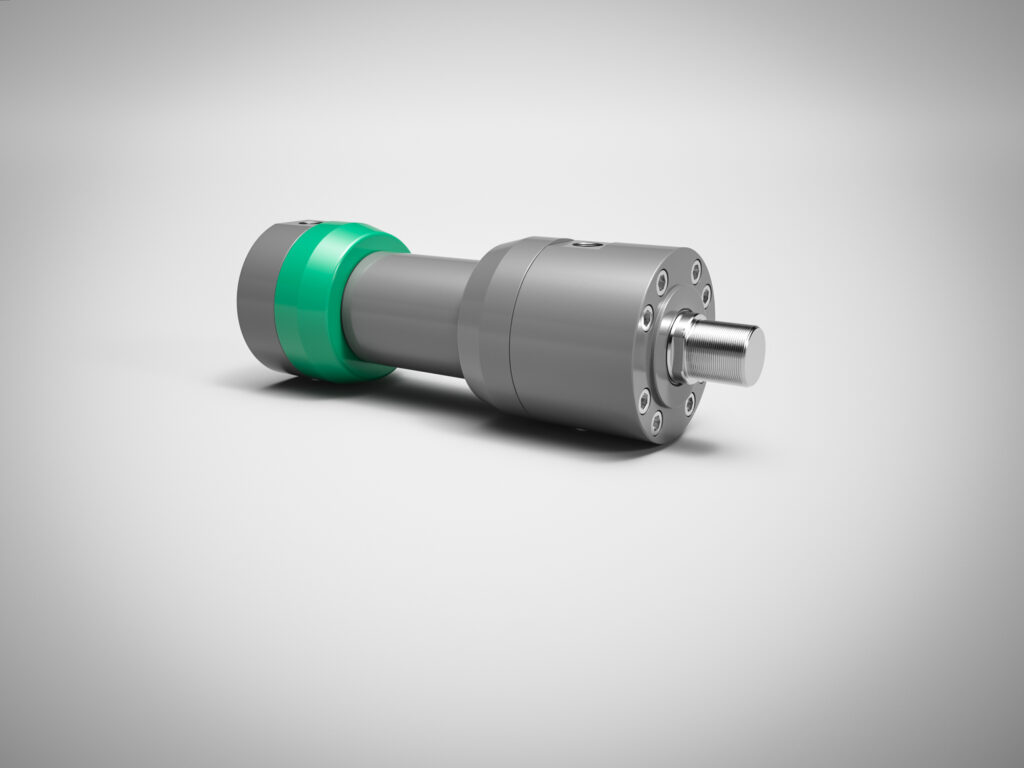
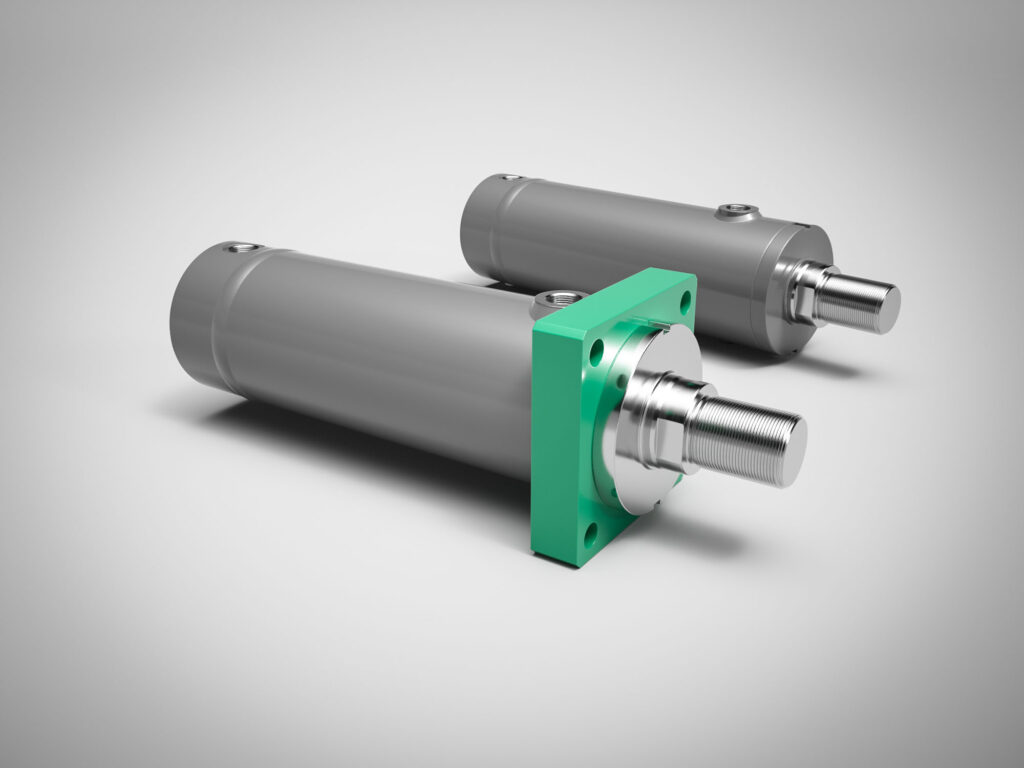
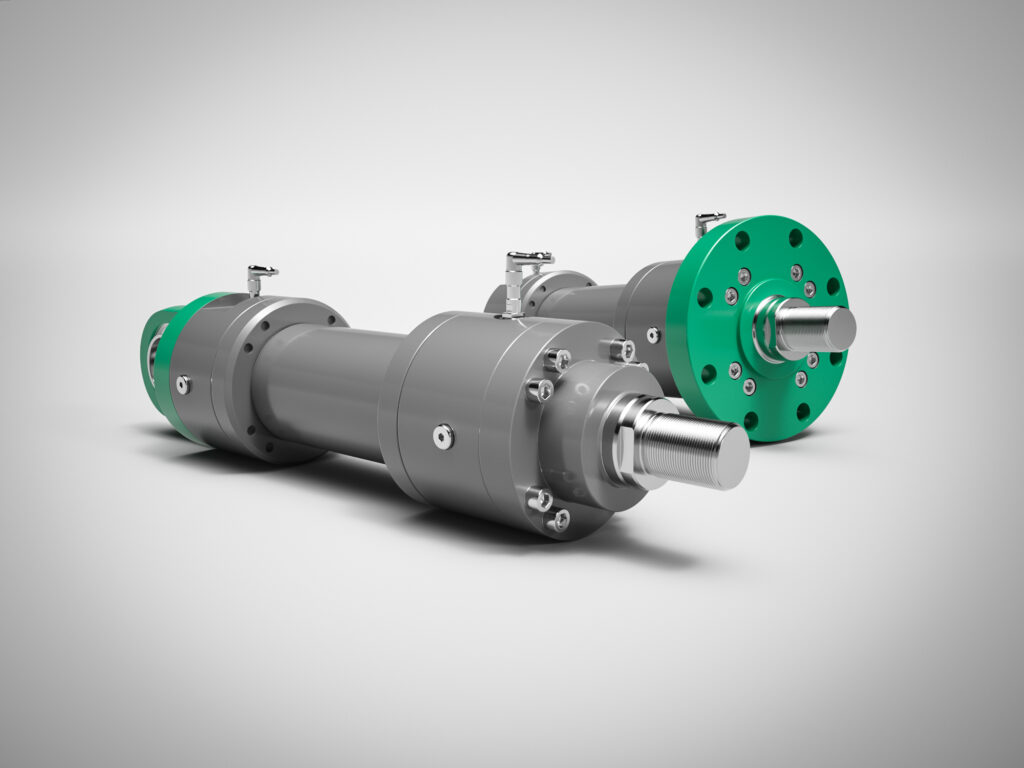
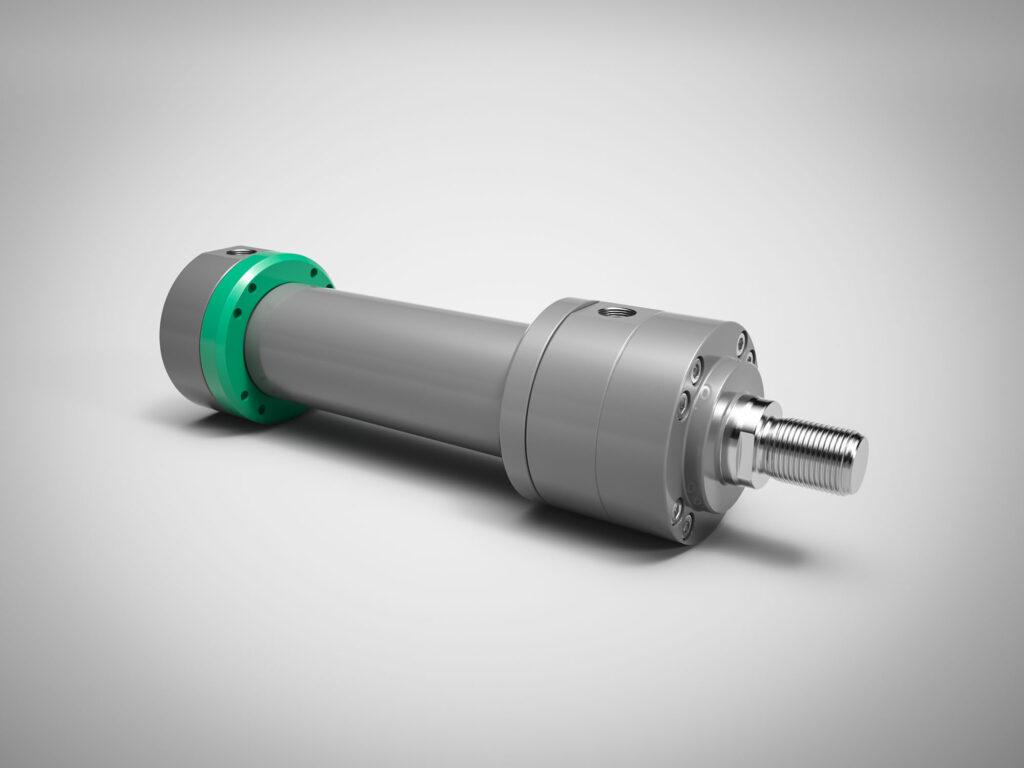
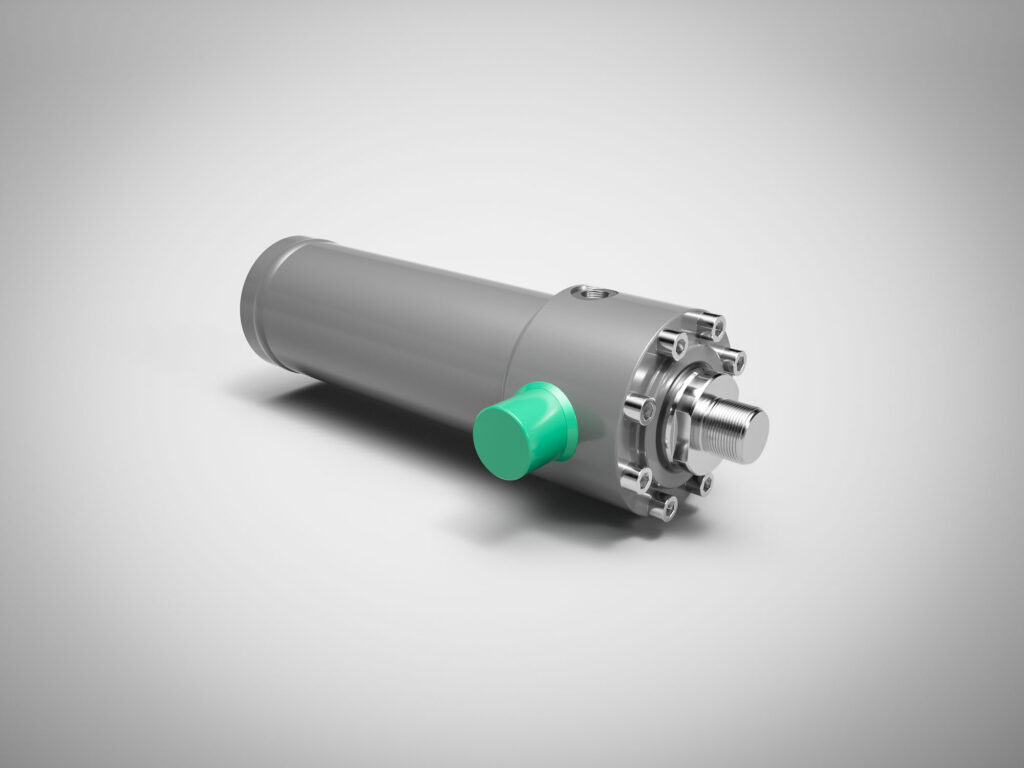
Differential cylinder is the technical term for a conventional hydraulic cylinder.
The term “differential” comes from the Latin word “differre”, which means “to distinguish” or “to deviate”.
Because the piston rod is located on one side of the piston, different effective surfaces are created on which the pressure acts. This results in the cylinder having more force when extending than when retracting. This difference in force led to the designation differential cylinder.
Functioning of the differential cylinder
The basic function of a differential cylinder is to convert hydraulic pressure into mechanical energy.
The force of a hydraulic cylinder depends on pressure and area according to the hydraulic law: F = px A (force = pressure x area)
When the hydraulic fluid is pumped into the bottom chamber, it creates pressure that pushes the piston upwards, thus moving the piston rod outwards.
Main components of a cylinder
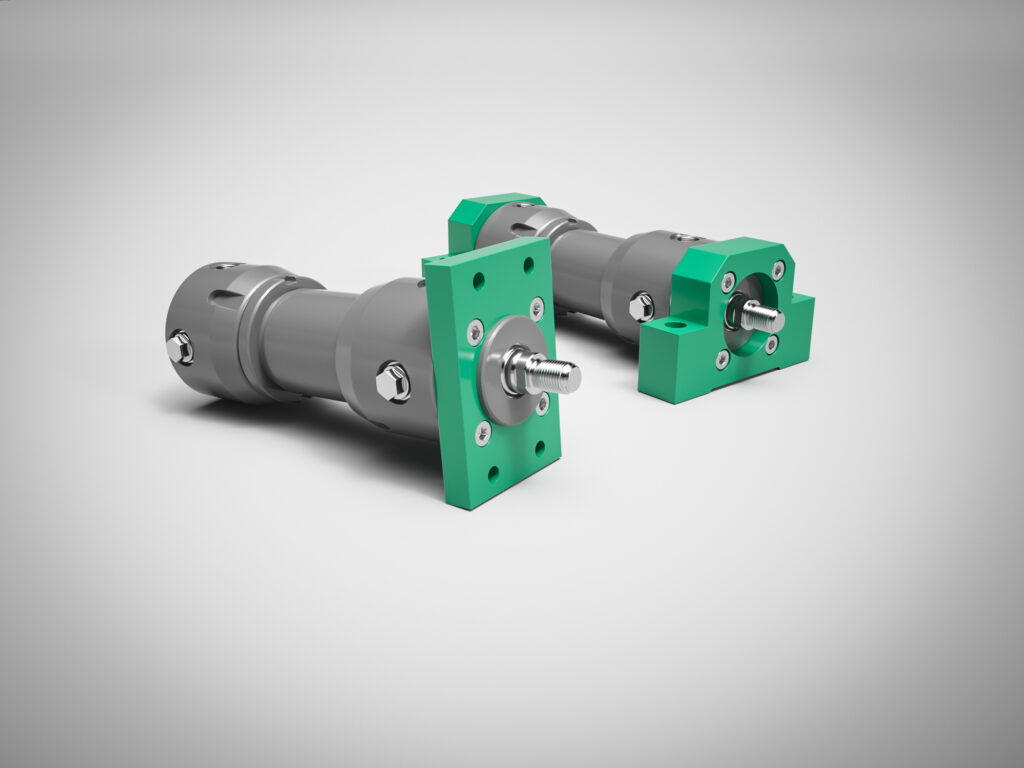
The main components of a hydraulic cylinder are the cylinder tube, cylinder head and base, as well as the piston rod and piston, the necessary seals and fixings.
Application areas
Industrial applications
Differential cylinders are used in a wide variety of industries.
Common industrial applications include:
- Production facilities: In presses, punches and bending machines.
- Material handling: In conveyor systems, lifting tables and manipulators.
- Automation technology: In various robotics and handling systems.
Other industries that use Differential cylinders:
- Energy technology
- Wind turbines: For blade adjustment (pitch system) and tower tilt.
- Hydroelectric power plants: In turbine blade controls and dam control systems.
- Mining:
- Conveyor systems: For lifting and swiveling movements.
- Mining machinery: In drilling rigs and transport vehicles.
Benefits for the customer
High reliability and durability
The differential cylinder is an important element in many hydraulic systems and offers specific advantages in applications that require different speeds and forces for extension and retraction movements.
Easy maintenance and upkeep
Maintaining a differential cylinder involves several aspects, such as regular inspections to ensure there are no leaks and that the cylinder is functioning properly.
Technical data and selection criteria
Another important aspect in the selection process is the application in which the cylinder will be used.
Maintenance and repair of Differential cylinders
Regular maintenance ensures a long service life.
The hydraulic fluid should be checked regularly and changed when necessary to ensure it is clean and free from contaminants.
Troubleshooting and repair
Other maintenance tasks include checking and adjusting the seals and inspecting the piston rod for wear or damage.